
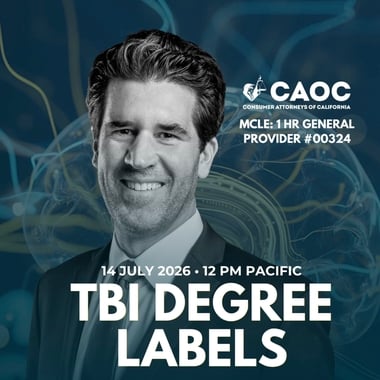
TBI Degree Labels
Strategies to neutralize use of TBI labels by defense to reduce or deny your client's damages
What You Will Learn
- Understand the mild, moderate, and severe assessment as a clinical triage scale measuring how the injury first presented rather than how much harm is caused
- How a “mild” TBI can be catastrophic while a “severe” injury resolves, because damages track functional impairment and proof rather than the label
- How the defense’s line of attack shifts the fight toward apportionment and damages or provoking a challenge to whether a brain injury exists depending on the severity label
- Neutralize the “mild” label by recontextualizing medical records, reframing terminology for the jury, and building the functional-loss narrative that the severity label obscures
What You Will Learn
- Understand the mild, moderate, and severe assessment as a clinical triage scale measuring how the injury first presented rather than how much harm is caused
- How a “mild” TBI can be catastrophic while a “severe” injury resolves, because damages track functional impairment and proof rather than the label
- How the defense’s line of attack shifts the fight toward apportionment and damages or provoking a challenge to whether a brain injury exists depending on the severity label
- Neutralize the “mild” label by recontextualizing medical records, reframing terminology for the jury, and building the functional-loss narrative that the severity label obscures
Register now for immediate access to this program.
Register NowAlready Registered?
LoginJUMP TO:
Price
$79 USD
for Plaintiff Attorney Members
$99 USD
for Plaintiff Attorney Non-Members
75 minutes
Date Published
July 14, 2026
Publisher
Consumer Attorneys of California
Subjects
Brain Injuries
Questions
For immediate assistance please consult our FAQ page. If you're unable to find the answer you need, please call 737-201-2059 (M-F, 8am-6pm CT) or e-mail customer service.
JUMP TO:
Summary

Program Titles and Supporting Materials
This program contains the following components:
Media Files
Downloadable Files
Credit
If applicable, you may obtain credit in multiple jurisdictions simultaneously for this program (see pending/approved list below). If electing credit for this program, registrants in jurisdictions not listed below will receive a Certificate of Completion that may or may not meet credit requirements in other jurisdictions. Where applicable, credit will be only awarded to a paid registrant completing all the requirements of the program as determined by the selected accreditation authority.
Click on jurisdiction for specific details:
How to Attend
Join the self-paced program from your office, home, or hotel room using a computer and high speed internet connection. You may start and stop the program at your convenience, continue where you left off, and review supporting materials as often as you like. Please note: Internet Explorer is no longer a supported browser. We recommend using Google Chrome, Mozilla Firefox or Safari for best results.
Technical Requirements
You may access this course on a computer or mobile device with high speed internet (iPhones require iOS 10 or higher). Recommended browsers are Google Chrome or Mozilla Firefox.
More
Refund Policy
SeminarWeb and Alberta Civil Trial Lawyers Association programs are non-refundable.
Privacy Statement
We respect and are committed to protecting your privacy. Read Statement.
YOU MAY ALSO BE INTERESTED IN...

Overcoming the Myths of A “Mild” TBI Case
Live Webinars



.png)




.png)


.png)
.png)